Tuesday, 18 January 2011

Laboratorium Astrofisika

 “If we do not hope, we will not find what is beyond your hopes.”

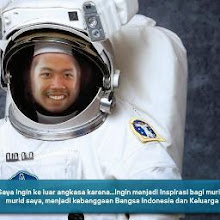
"Orang-orang sukses di dunia ini, awal dari kesukesaannya dimulai dari bermimpi.
Dari mimpinya mereka berusaha untuk mewujudkannya, hingga mereka berhasil mencapai mimpinya.
 Semoga, Amin"

Astrophysics Laboratory


Harvard-Smithsonian Center for Astrophysics
60 Garden Street, Cambridge, MA 02138

Superconducting Submillimeter Detectors
 
Instructors: Edward Tong and Abby Hedden
 

The heart of the best current millimeter- and sub-millimeter-wavelength radio receivers used for astronomy is a superconducting microelectronic device known as an SIS junction. This experiment is intended to demonstrate the unusual quantum mechanical properties of SIS junctions that permit them to be used as sensitive detectors of electromagnetic radiation.

The devices consist of a micron-scale sandwich of alternating layers of Superconductor/ Insulator/Superconductor (hence the acronym SIS), with the insulating barrier sufficiently thin (~100 A) to permit quantum-mechanical tunneling of charge carriers. Tunneling of single electrons leads to a highly nonlinear current-voltage characteristic that permits heterodyne detection (mixing). Tunneling of Cooper pairs leads to a DC current through the device with no voltage drop (the Josephson effect).


Specific experiments to be carried out in the Submillimeter Receiver Lab include: (1) observation of the quantum-mechanical current-voltage characteristic when SIS junctions are immersed in liquid helium; (2) suppression of the zero-voltage supercurrent via application of a magnetic field; (3) inducement of photon-assisted tunneling steps in the current-voltage characteristic when the SIS junction is exposed to high-frequency radio waves. In addition, the operation of a complete 230-Gigahertz heterodyne receiver will be demonstrated in the lab.

Making the measurements will expose students to laboratory practice in vacuum, cryogenic, electronic, microwave, and optical technology. Understanding the data gathered will involve exploration of some fascinating aspects of the macroscopic quantum state that is superconductivity, and of quantum-mechanical tunneling.

Laboratory Astrophysics
Science is successful because the physical laws we discover on Earth work everywhere and every when. We use laboratory experiments to expand our understanding of physical processes and then apply these results to the processes throughout the Universe. In some cases laboratory experiments can reproduce similar physics. For example, highly charged plasmas can be created in the laboratory to study the collisions between electrons and ions that occur in the hot solar corona. In other cases, such as in the extreme environments of black holes, we cannot reproduce the conditions. However, even in those cases, the pattern of observed spectral signatures allows us to identify the species and determine some of the physical conditions and processes. Spectral features observed in the solar corona are also observed from black hole sources.  


Useful Link

Monday, 17 January 2011

Indonesian Space Force Command


Indonesian Space Force Command   

 Komando Untuk Keamanan Luar Angkasa 

Dari Angkatan Antariksa Indonesia

"Kami Menjelajahi Alam Raya untuk Menemukan Keagungan Sang Maha Kuasa"

 ~Gen. Arip Nurahman~


(Komando Pasukan Khusus Angkatan Antariksa Indonesia)


(Korps Pasukan Khas Angkatan Udara)


Jet-powered fighters

It has become common in the aviation community to classify jet fighters by "generations" for historical purposes. There are no official definitions of these generations; rather, they represent the notion that there are stages in the development of fighter design approaches, performance capabilities, and technological evolution.

The timeframes associated with each generation are inexact and are only indicative of the period during which their design philosophies and technology employment enjoyed a prevailing influence on fighter design and development. These timeframes also encompass the peak period of service entry for such aircraft.


Third-generation jet fighters (early 1960s to circa 1970)

The third generation witnessed continued maturation of second-generation innovations, but it is most marked by renewed emphases on maneuverability and traditional ground-attack capabilities. Over the course of the 1960s, increasing combat experience with guided missiles demonstrated that combat would devolve into close-in dogfights. Analog avionics began to be introduced, replacing older "steam-gauge" cockpit instrumentation. Enhancements to improve the aerodynamic performance of third-generation fighters included flight control surfaces such as canards, powered slats, and blown flaps. A number of technologies would be tried for Vertical/Short Takeoff and Landing, but thrust vectoring would be successful on the Harrier jump jet.

Growth in air combat capability focused on the introduction of improved air-to-air missiles, radar systems, and other avionics. While guns remained standard equipment (early models of F-4 being a notable exception), air-to-air missiles became the primary weapons for air superiority fighters, which employed more sophisticated radars and medium-range RF AAMs to achieve greater "stand-off" ranges, however, kill probabilities proved unexpectedly low for RF missiles due to poor reliability and improved electronic countermeasures (ECM) for spoofing radar seekers.

Infrared-homing AAMs saw their fields of view expand to 45°, which strengthened their tactical usability. Nevertheless, the low dogfight loss-exchange ratios experienced by American fighters in the skies over Vietnam led the U.S. Navy to establish its famous "TOPGUN" fighter weapons school, which provided a graduate-level curriculum to train fleet fighter pilots in advanced Air Combat Maneuvering (ACM) and Dissimilar Air Combat Training (DACT) tactics and techniques.

This era also saw an expansion in ground-attack capabilities, principally in guided missiles, and witnessed the introduction of the first truly effective avionics for enhanced ground attack, including terrain-avoidance systems. Air-to-surface missiles (ASM) equipped with electro-optical (E-O) contrast seekers – such as the initial model of the widely used AGM-65 Maverick – became standard weapons, and laser-guided bombs (LGBs) became widespread in effort to improve precision-attack capabilities. Guidance for such precision-guided munitions (PGM) was provided by externally mounted targeting pods, which were introduced in the mid-1960s.

It also led to the development of new automatic-fire weapons, primarily chain-guns that use an electric engine to drive the mechanism of a cannon; this allowed a single multi-barrel weapon (such as the 20 mm Vulcan) to be carried and provided greater rates of fire and accuracy. Powerplant reliability increased and jet engines became "smokeless" to make it harder to visually sight aircraft at long distances.

Dedicated ground-attack aircraft (like the Grumman A-6 Intruder, SEPECAT Jaguar and LTV A-7 Corsair II) offered longer range, more sophisticated night attack systems or lower cost than supersonic fighters. With variable-geometry wings, the supersonic F-111 introduced the Pratt & Whitney TF30, the first turbofan equipped with afterburner. The ambitious project sought to create a versatile common fighter for many roles and services. It would serve well as an all-weather bomber, but lacked the performance to defeat other fighters. The McDonnell F-4 Phantom was designed around radar and missiles as an all-weather interceptor, but emerged as a versatile strike bomber nimble enough to prevail in air combat, adopted by the U.S. Navy, Air Force and Marine Corps.

Despite numerous shortcomings that would be not be fully addressed until newer fighters, the Phantom claimed 280 aerial kills, more than any other U.S. fighter over Vietnam.[6] With range and payload capabilities that rivaled that of World War II bombers such as B-24 Liberator, the Phantom would became a highly successful multirole aircraft.
See also: List of third generation jet fighters

Powered By:
Tentara Nasional Indonesia Angkatan Darat (Indonesian Army)


Tentara Nasional Indonesia Angkatan Laut (Indonesian Navy)

Tentara Nasional Indonesia Angkatan Udara (Indonesian Air Force)

Kepolisian Negara Republik Indonesia (Indonesian Police)


Sumber: Wikipedia

Friday, 14 January 2011

Pesawat Antariksa yang Dapat Dipakai Kembali

The first reusable spacecraft, the X-15, was air-launched on a suborbital trajectory on July 19, 1963. The first partially reusable orbital spacecraft, the Space Shuttle, was launched by the USA on the 20th anniversary of Yuri Gagarin's flight, on April 12, 1981.


During the Shuttle era, six orbiters were built, all of which have flown in the atmosphere and five of which have flown in space. The Enterprise was used only for approach and landing tests, launching from the back of a Boeing 747 and gliding to deadstick landings at Edwards AFB, California.

The first Space Shuttle to fly into space was the Columbia, followed by the Challenger, Discovery, Atlantis, and Endeavour. The Endeavour was built to replace the Challenger when it was lost in January 1986. The Columbia broke up during reentry in February 2003.

The first automatic partially reusable spacecraft was the Buran (Snowstorm), launched by the USSR on November 15, 1988, although it made only one flight. This spaceplane was designed for a crew and strongly resembled the U.S. Space Shuttle, although its drop-off boosters used liquid propellants and its main engines were located at the base of what would be the external tank in the American Shuttle.

Lack of funding, complicated by the dissolution of the USSR, prevented any further flights of Buran. The Space Shuttle has since been modified to allow for autonomous re-entry via the addition of a control cable running from the control cabin to the mid-deck which would allow for the automated deployment of the landing gear in the event a un-crewed re-entry was required following abandonment due to damage at the ISS.

Per the Vision for Space Exploration, the Space Shuttle is due to be retired in 2010 due mainly to its old age and high cost of program reaching over a billion dollars per flight. The Shuttle's human transport role is to be replaced by the partially reusable Crew Exploration Vehicle (CEV) no later than 2014. The Shuttle's heavy cargo transport role is to be replaced by expendable rockets such as the Evolved Expendable Launch Vehicle (EELV) or a Shuttle Derived Launch Vehicle.

Scaled Composites' SpaceShipOne was a reusable suborbital spaceplane that carried pilots Mike Melvill and Brian Binnie on consecutive flights in 2004 to win the Ansari X Prize. The Spaceship Company will build its successor SpaceShipTwo. A fleet of SpaceShipTwos operated by Virgin Galactic should begin reusable private spaceflight carrying paying passengers in 2009.


Source:

http://en.wikipedia.org/wiki/Reusable_launch_system