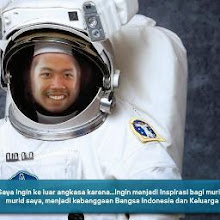
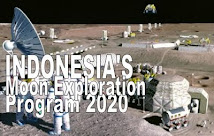
Indonesian Space Force Command
Komando Untuk Keamanan Luar Angkasa
Dari Angkatan Antariksa Indonesia

"Kami Menjelajahi Alam Raya untuk Menemukan Keagungan Sang Maha Kuasa"
~Gen. Arip Nurahman~


(Komando Pasukan Khusus Angkatan Antariksa Indonesia)


(Korps Pasukan Khas Angkatan Udara)
Jet-powered fighters
It has become common in the aviation community to classify jet fighters by "generations" for historical purposes. There
are no official definitions of these generations; rather, they
represent the notion that there are stages in the development of fighter
design approaches, performance capabilities, and technological
evolution.
The
timeframes associated with each generation are inexact and are only
indicative of the period during which their design philosophies and
technology employment enjoyed a prevailing influence on fighter design
and development. These timeframes also encompass the peak period of
service entry for such aircraft.
Fifth generation jet fighters (2005 to the present)
Main article: Fifth generation jet fighter

The fifth generation was ushered in by the Lockheed Martin/Boeing F-22 Raptor
in late 2005. Currently the cutting edge of fighter design,
fifth-generation fighters are characterized by being designed from the
start to operate in a network-centric combat environment, and to
feature extremely low, all-aspect, multi-spectral signatures employing
advanced materials and shaping techniques. They have multifunction AESA radars with high-bandwidth, low-probability of intercept (LPI) data transmission capabilities. The Infra-red search and track
sensors incorporated for air-to-air combat as well as for
air-to-ground weapons delivery in the 4.5th generation fighters are now
fused in with other sensors for Situational Awareness IRST or SAIRST,
which constantly tracks all targets of interest around the aircraft so
the pilot need not guess when he glances. (Requires software upgrade on
the F-22.)
These sensors, along with advanced avionics, glass cockpits, helmet-mounted sights (not available on F-22), and improved secure, jamming-resistant LPI datalinks are highly integrated to provide multi-platform, multi-sensor data fusion for vastly improved situational awareness while easing the pilot's workload.[9] Avionics suites rely on extensive use of very high-speed integrated circuit (VHSIC) technology, common modules, and high-speed data buses. Overall, the integration of all these elements is claimed to provide fifth-generation fighters with a "first-look, first-shot, first-kill capability".
These sensors, along with advanced avionics, glass cockpits, helmet-mounted sights (not available on F-22), and improved secure, jamming-resistant LPI datalinks are highly integrated to provide multi-platform, multi-sensor data fusion for vastly improved situational awareness while easing the pilot's workload.[9] Avionics suites rely on extensive use of very high-speed integrated circuit (VHSIC) technology, common modules, and high-speed data buses. Overall, the integration of all these elements is claimed to provide fifth-generation fighters with a "first-look, first-shot, first-kill capability".
The AESA radar offers unique capabilities for fighters (and it is also quickly becoming a sine qua non
for Generation 4.5 aircraft designs, as well as being retrofitted onto
some fourth-generation aircraft). In addition to its high resistance
to ECM and LPI features, it enables the fighter to function as a sort
of "mini-AWACS," providing high-gain electronic support measures (ESM) and electronic warfare (EW) jamming functions.

Other
technologies common to this latest generation of fighters includes
integrated electronic warfare system (INEWS) technology, integrated
communications, navigation, and identification (CNI) avionics
technology, centralized "vehicle health monitoring" systems for ease of
maintenance, fiber optics data transmission, and stealth technology.
Maneuver
performance remains important and is enhanced by thrust-vectoring,
which also helps reduce takeoff and landing distances. Supercruise may
or may not be featured; it permits flight at supersonic speeds without
the use of the afterburner – a device that significantly increases IR
signature when used in full military power.
A
key attribute of fifth-generation fighters is very-low-observables
stealth. Great care has been taken in designing its layout and internal
structure to minimize RCS over a broad bandwidth of detection and
tracking radar frequencies; furthermore, to maintain its VLO signature
during combat operations, primary weapons are carried in internal weapon
bays that are only briefly opened to permit weapon launch.
Furthermore, stealth technology has advanced to the point where it can
be employed without a tradeoff with aerodynamics performance, in
contrast to previous stealth efforts. Some attention has also been paid
to reducing IR signatures, especially on the F-22. Detailed
information on these signature-reduction techniques is classified, but
in general includes special shaping approaches, thermoset and thermoplastic
materials, extensive structural use of advanced composites, conformal
sensors, heat-resistant coatings, low-observable wire meshes to cover
intake and cooling vents, heat ablating tiles on the exhaust troughs
(seen on the Northrop YF-23), and coating internal and external metal areas with radar-absorbent materials and paint (RAM/RAP).
.jpg)
.jpg)
The
expense of developing such sophisticated aircraft is as high as their
capabilities. The U.S. Air Force had originally planned to acquire 650
F-22s, but it now appears that only 187 will be built. As a result, its
unit flyaway cost (FAC) is reported to be around $140 million. To spread the development costs – and production base – more broadly, the Joint Strike Fighter
(JSF) program enrolls eight other countries as cost- and risk-sharing
partners. Altogether, the nine partner nations anticipate procuring
over 3000 Lockheed Martin F-35 Lightning II fighters at an anticipated average FAC of $80–85 million.
The F-35, however, is designed to be a family of three aircraft, a conventional take-off and landing (CTOL) fighter, a short take-off and vertical landing (STOVL) fighter, and a Catapult Assisted Take Off But Arrested Recovery (CATOBAR) fighter, each of which has a different unit price and slightly varying specifications in terms of fuel capacity (and therefore range), size and payload.
Other countries have initiated fifth-generation fighter development projects, with Russia's Sukhoi PAK-FA anticipated to enter service circa 2012–2015. In October 2007, Russia and India signed an agreement for joint participation in a Fifth-Generation Fighter Aircraft Program (FGFA), which will give India responsibility for development of a two-seat model of the PAK-FA. India is also developing its own indigenous fifth generation aircraft named Medium Combat Aircraft. China is reported to be pursuing multiple fifth-generation projects under the westernJ-XX, while Japan is exploring their technical feasibility to produce fifth-generation fighters.
The F-35, however, is designed to be a family of three aircraft, a conventional take-off and landing (CTOL) fighter, a short take-off and vertical landing (STOVL) fighter, and a Catapult Assisted Take Off But Arrested Recovery (CATOBAR) fighter, each of which has a different unit price and slightly varying specifications in terms of fuel capacity (and therefore range), size and payload.
Other countries have initiated fifth-generation fighter development projects, with Russia's Sukhoi PAK-FA anticipated to enter service circa 2012–2015. In October 2007, Russia and India signed an agreement for joint participation in a Fifth-Generation Fighter Aircraft Program (FGFA), which will give India responsibility for development of a two-seat model of the PAK-FA. India is also developing its own indigenous fifth generation aircraft named Medium Combat Aircraft. China is reported to be pursuing multiple fifth-generation projects under the westernJ-XX, while Japan is exploring their technical feasibility to produce fifth-generation fighters.
- See also: List of fifth generation jet fighters
Powered By:
Tentara Nasional Indonesia Angkatan Darat (Indonesian Army)

Tentara Nasional Indonesia Angkatan Laut (Indonesian Navy)

Tentara Nasional Indonesia Angkatan Udara (Indonesian Air Force)

Kepolisian Negara Republik Indonesia (Indonesian Police)


Sumber: Wikipedia