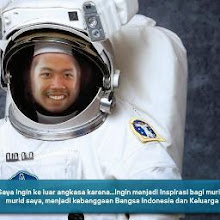
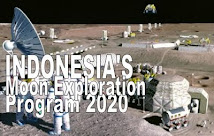
Bagaimanakah program IPTEK Antariksa Negeri Bollywood ini?
Wednesday, 11 July 2012


Saturday, 7 July 2012
Mechatronics
Mechatronics is the combination of Mechanical engineering, Electronic engineering, Computer engineering, Software engineering, Control engineering, and Systems Design engineering in order to design and manufacture useful products. Mechatronics is a multidisciplinary field of engineering, that is to say it rejects splitting engineering
into separate disciplines. Originally, mechatronics just included the
combination between mechanics and electronics, hence the word is only a
portmanteau of mechanics and electronics; however, as
technical systems have become more and more complex the word has been
"updated" during recent years to include more technical areas.
French standard NF E 01-010 gives the following definition: “approach
aiming at the synergistic integration of mechanics, electronics,
control theory, and computer science within product design and
manufacturing, in order to improve and/or optimize its functionality".

A mechatronics engineer unites the principles of mechanics,
electronics, and computing to generate a simpler, more economical and
reliable system. Mechatronics is centered on mechanics, electronics, computing, control engineering, molecular engineering (from nanochemistry and biology), and optical engineering,
which, combined, make possible the generation of simpler, more
economical, reliable and versatile systems. The portmanteau
"mechatronics" was coined by Tetsuro Mori, the senior engineer of the Japanese company Yaskawa in 1969. An industrial robot
is a prime example of a mechatronics system; it includes aspects of
electronics, mechanics, and computing to do its day-to-day jobs.
Engineering cybernetics deals with the question of control engineering of mechatronic systems. It is used to control or regulate such a system (see control theory).
Through collaboration, the mechatronic modules perform the production
goals and inherit flexible and agile manufacturing properties in the
production scheme. Modern production equipment consists of mechatronic
modules that are integrated according to a control architecture. The most known architectures involve hierarchy, polyarchy, heterarchy, and hybrid. The methods for achieving a technical effect are described by control algorithms, which might or might not utilize formal methods in their design. Hybrid systems important to mechatronics include production systems, synergy drives, planetary exploration rovers, automotive subsystems such as anti-lock braking systems and spin-assist, and every-day equipment such as autofocus cameras, video, hard disks, and CD players.
Lihat Juga:
Course structure
Mechatronic students take courses from across the various fields listed below:
- Mechanical engineering and materials science subjects
- Electronic engineering subjects
- Computer engineering subjects
- Computer science subjects
- Systems and control engineering subjects
- Optomechanics (optical engineering) subjects
- Robotics subjects
Application
- Machine vision
- Automation and robotics
- Servo-mechanics
- Sensing and control systems
- Automotive engineering, automotive equipment in the design of subsystems such as anti-lock braking systems
- Computer-machine controls, such as computer driven machines like IE CNC milling machines
- Expert systems
- Industrial goods
- Consumer products
- Mechatronics systems
- Medical mechatronics,medical imaging systems
- Structural dynamic systems
- Transportation and vehicular systems
- Mechatronics as the new language of the automobile
- Diagnostic, reliability, and control system techniques
- Computer aided and integrated manufacturing systems
- Computer-aided design
- Engineering and manufacturing systems
- Packaging
- Microcontrollers / PLC's
- Mobile apps
Lihat Juga:
- Cybernetics
- Control Theory
- Electromechanics
- Mechatronics Journals
- List of engineering topics
- Materials Engineering
- Mechanical Engineering Technology
- Robotics
- Stereochemistry - A very advanced form of Elemental Engineering
- Supramolecular Engineering
- Systems Engineering
Further reading
- Robert Munnig Schmidt, Georg Schitter and Jan van Eijk, High Performance Mechatronics. IOS Press, 2011.
- Bishop, Robert H., Mechatronics: an introduction. CRC Press, 2006.
- De Silva, Clarence W., Mechatronics: an integrated approach. CRC Press, 2005
- Onwubolu, Godfrey C., Mechatronics: principles and applications. Butterworth-Heinemann, 2005.
- Rankers, Adrian M., Machine Dynamics in Mechatronic Systems. University Twente, 1997
Tuesday, 3 July 2012
Organisasi Antariksa Negeri Shah Ruk Khan
The Indian Space Research Organisation (ISRO, /ˈɪsroʊ/; Hindi: भारतीय अंतरिक्ष अनुसंधान संगठन Bhāratīya Antarikṣa Anusandhāna Saṅgaṭhana) is the primary space agency of the Indian government.
ISRO is amongst the six largest government space agencies in the world, along with USA's NASA, Russia's RKA, Europe's ESA, China's CNSA and Japan's JAXA. Its primary objective is to advance space technology and use its applications for national benefit.
Established in 1969, ISRO superseded the erstwhile Indian National Committee for Space Research (INCOSPAR). Headquartered in Bengaluru, ISRO is under the administrative control of the Department of Space, Government of India.
ISRO has achieved numerous milestones since its establishment. India's first satellite, Aryabhata, was built by ISRO and launched by the Soviet Union in 1975.
Rohini, the first satellite to be placed in orbit by an Indian-made launch vehicle, SLV-3, was launched in 1980. ISRO subsequently developed two other rockets: the Polar Satellite Launch Vehicle (PSLV) for putting satellites into polar orbits and the Geosynchronous Satellite Launch Vehicle (GSLV) for placing satellites into geostationary orbits.
These rockets have launched numerous communications satellites and earth observation satellite. In 2008, Chandrayaan-1, India's first mission to the Moon was launched.
Over the years, ISRO has conducted a variety of operations for both Indian and foreign clients. ISRO's satellite launch capability is mostly provided by indigenous launch vehicles and launch sites.
In 2008, ISRO successfully launched its first lunar probe, Chandrayaan-1, while future plans include indigenous development of GSLV, manned space missions, further lunar exploration, mars exploration and interplanetary probes.
ISRO has several field installations as assets, and cooperates with the international community as a part of several bilateral and multilateral agreements.
Subscribe to:
Comments (Atom)