Tuesday, 9 July 2013

KEPO: Animasi Laboratorium Sains Mars

Mars Science Laboratory Curiosity Rover Animation 


This 11-minute animation depicts key events of NASA's Mars Science Laboratory mission, which will launch in late 2011 and land a rover, Curiosity, on Mars in August 2012. A shorter 4-minute version of this animation, with narration, is also available on our youtube page. [NASA Jet Propulsion Laboratory]

Mars Science Laboratory (MSL) is a robotic space probe mission to Mars launched by NASA on November 26, 2011, which successfully landed Curiosity, a Mars rover, in Gale Crater on August 6, 2012.

The overall objectives include investigating Mars' habitability, studying its climate and geology, and collecting data for a manned mission to Mars.

The rover carries a variety of scientific instruments designed by an international team.

The Mars Science Laboratory mission is part of NASA's Mars Exploration Program, a long-term effort for the robotic exploration of Mars that is managed by the Jet Propulsion Laboratory of California Institute of Technology. The total cost of the MSL project is about US$2.5 billion. [Rp. 25.000.000.000.000/25 Trilyun] Germany contributed 2.5 million euros ($3.1 million USD)


Instrument Inti

APXS - Alpha Particle X-ray Spectrometer
ChemCam - Chemistry and Camera Complex
CheMin - Chemistry and Mineralogy
DAN – Dynamic Albedo of Neutrons
Hazcam - Hazard Avoidance Camera
MAHLI – Mars Hand Lens Imager
MARDI – Mars Descent Imager
MastCam - Mast Camera
MEDLI – MSL EDL Instrument
Navcam - Navigation Camera
RAD – Radiation assessment detector
REMS – Rover Environmental Monitoring Station
SAM – Sample Analysis at Mars

REMS – Rover Environmental Monitoring Station
RAD – Radiation assessment detector
Navcam - Navigation Camera
MEDLI – MSL EDL Instrument
MastCam - Mast Camera
MARDI – Mars Descent Imager
MAHLI – Mars Hand Lens Imager
Hazcam - Hazard Avoidance Camera
DAN – Dynamic Albedo of Neutrons
CheMin - Chemistry and Mineralogy
ChemCam - Chemistry and Camera Complex
APXS - Alpha Particle X-ray Spectrometer


Begitu memasuki atmosfer Mars, wahana yang membawanya melakukan manuver untuk memperlambat kecepatan hingga ketinggian sekitar 11 kilometer dari permukaan Mars. 

Kemudian parasut supersonik dikembangkan hingga wahana turun sampai ketinggian 1,6 kilometer. Wahana tersebut kemudian melepas retrorocket yang akan memandu pendaratan robot Curiosity yang dibawanya. Retrorocket kemudian menurunkan robot Curiosity menggunakan tali nilon dengan teknik yang disebut "derek angkasa". 

Begitu Curiosity menyentuh permukaan Mars, tali nilon yang digunakan dilepas dan retrorocket terbang menjauh. Robot beroda enam itu pun mulai bergerak di permukaan Mars. Curiosity diharapkan bisa meneliti molekul yang mendukung kehidupan di Mars sekaligus memecahkan misteri evolusi Mars. 

Keberhasilan ini juga menandai keberhasilan pertama mendaratkan robot beroda enam di Mars. 

Kunjungi Juga:

Monday, 8 July 2013

Mengenal IPTEK Pembuatan Kapal Selam Nuklir Canggih

Memahami Pembuatan Kapal Selam Canggih


A nuclear submarine is a submarine powered by a nuclear reactor. The performance advantages of nuclear submarines over "conventional" (typically diesel-electric) submarines are considerable: nuclear propulsion, being completely independent of air, frees the submarine from the need to surface frequently, as is necessary for conventional submarines; the large amount of power generated by a nuclear reactor allows nuclear submarines to operate at high speed for long durations; and the long interval between refuellings grants a range limited only by consumables such as food.

Current generations of nuclear submarines never need to be refueled throughout their 25-year lifespans. 

Conversely, the limited power stored in electric batteries means that even the most advanced conventional submarine can only remain submerged for a few days at slow speed, and only a few hours at top speed; recent advances in air-independent propulsion have eroded this disadvantage somewhat. 

The high cost of nuclear technology means that relatively few states have fielded nuclear submarines. Some of the most serious nuclear and radiation accidents ever to occur have involved Soviet nuclear submarine mishaps.


The VMF Typhoon class submarine, is nuclear-powered and the world's largest-displacement submarine.

The Science and Technology of Nuclear Submarine

The main difference between conventional submarines and nuclear submarines is the power generation system. Nuclear submarines employ nuclear reactors for this task. They either generate electricity that powers electric motors connected to the propeller shaft or rely on the reactor heat to produce steam that drives steam turbines (cf. nuclear marine propulsion). 

Reactors used in submarines typically use highly enriched fuel (often greater than 20%) to enable them to deliver a large amount of power from a smaller reactor and operate longer between refuelings – which are difficult due to the reactor's position within the submarine's pressure hull.

The nuclear reactor also supplies power to the submarine's other subsystems, such as for maintenance of air quality, fresh water production by distilling salt water from the ocean, temperature regulation, etc. All naval nuclear reactors currently in use are operated with diesel generators as a backup power system. 

These engines are able to provide emergency electrical power for reactor decay heat removal, as well as enough electric power to supply an emergency propulsion mechanism. Submarines may carry nuclear fuel for up to 30 years of operation. The only resource that limits the time underwater is the food supply for the crew and maintenance of the vessel.


The stealth weakness of nuclear submarines is the need to cool the reactor even when the submarine is not moving; about 70% of the reactor output heat is dissipated into the sea water. This leaves a "thermal wake", a plume of warm water of lower density which ascends to the sea surface and creates a "thermal scar" that is observable by thermal imaging systems, e.g., FLIR.

Another problem is that the reactor is always running, creating steam noise, which can be heard on SONAR, and the reactor pump (used to circulate reactor coolant), also creates noise, as opposed to a conventional submarine, which can move about on incredibly silent electric motors.

Lihat Juga:


Sumber:

Wikipedia

Sunday, 7 July 2013

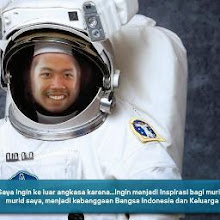
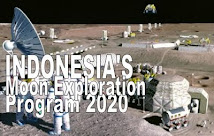
Memacu Perkembangan Pendidikan Antariksa di Indonesia

"Mars is there, waiting to be reached."
*Buzz Aldrin*


Karir Militer

Buzz Aldrin graduated third in his class at West Point in 1951, with a bachelor of science degree in mechanical engineering. He was commissioned as a Second Lieutenant in the U.S. Air Force and served as a jet fighter pilot during the Korean War. He flew 66 combat missions in F-86 Sabres and shot down two Mikoyan-Gurevich MiG-15 aircraft. The June 8, 1953, issue of Life magazine featured gun camera photos taken by Aldrin of one of the Russian pilots ejecting from his damaged aircraft.

Subsequent to the war, Aldrin was assigned as an aerial gunnery instructor at Nellis Air Force Base in Nevada, and next was an aide to the dean of faculty at the United States Air Force Academy, which had recently begun operations in 1955. 

He flew F-100 Super Sabres as a flight commander at Bitburg Air Base, Germany, in the 22d Fighter Squadron. In 1963 Aldrin earned a doctor of science degree in astronautics from Massachusetts Institute of Technology. His graduate thesis was "Line-of-sight guidance techniques for manned orbital rendezvous", the dedication of which read, "In the hopes that this work may in some way contribute to their exploration of space, this is dedicated to the crew members of this country’s present and future manned space programs. 

If only I could join them in their exciting endeavors!" On completion of his doctorate, he was assigned to the Gemini Target Office of the Air Force Space Systems Division in Los Angeles before his selection as an astronaut. His initial application to join the astronaut corps was rejected on the basis of having never been a test pilot; that prerequisite was lifted when he re-applied and was accepted into the third astronaut class.

Buku-Buku Karya Beliau:

Books co-authored by Aldrin include Return to Earth (1973), Men From Earth (1989), Reaching for the Moon (2005), Look to the Stars (2009) and Magnificent Desolation (2009). He has also co-authored with John Barnes the science fiction novels Encounter with Tiber (1996) and The Return (2000). His book Mission to Mars was published in May 2013.

Neil Armstrong Hall of Engineering di Purdue University


Karir di NASA

Aldrin was selected as part of the third group of NASA astronauts selected in October 1963. Because test pilot experience was no longer a requirement, this was the first selection for which he was eligible. After the deaths of the original Gemini 9 prime crew, Elliot See and Charles Bassett, Aldrin and Jim Lovell were promoted to back-up crew for the mission. 

The main objective of the revised mission (Gemini 9A) was to rendezvous and dock with a target vehicle, but when this failed, Aldrin improvised an effective exercise for the craft to rendezvous with a coordinate in space. He was confirmed as pilot on Gemini 12, the last Gemini mission and the last chance to prove methods for extra-vehicular activity (EVA). Aldrin set a record for EVA, demonstrating that astronauts could work outside spacecraft.
On July 21, 1969, he became the second astronaut to walk on the Moon, keeping his record total EVA time until that was surpassed on Apollo 14. There has been much speculation about Aldrin's desire at the time to be the first astronaut to walk on the Moon. 

According to different NASA accounts, he had originally been proposed as the first to step onto the Moon's surface, but due to the physical positioning of the astronauts inside the compact lunar landing module, it was easier for the commander, Neil Armstrong, to be the first to exit the spacecraft.


"There's a need for accepting responsibility for a person's life and making choices that are not just ones for immediate short-term comfort. 
You need to make an investment, and the investment is in health and education."
*Buzz Aldrin*

Semoga dengan meningkatnya mutu pendidikan di Indonesia maka secara otomatis IPTEKS Antariksa Indonesia semakin maju.

Semangat!