By:
Arip Nurahman
Department of Physics
Faculty of Sciences and Mathematics, Indonesia University of Education
and
Follower Open Course Ware at Massachusetts Institute of Technology
Cambridge, USA
Department of Physics
http://web.mit.edu/physics/
http://ocw.mit.edu/OcwWeb/Physics/index.htm
&
Aeronautics and Astronautics Engineering
http://web.mit.edu/aeroastro/www/
http://ocw.mit.edu/OcwWeb/Aeronautics-and-Astronautics/index.htm
Arip Nurahman
Department of Physics
Faculty of Sciences and Mathematics, Indonesia University of Education
and
Follower Open Course Ware at Massachusetts Institute of Technology
Cambridge, USA
Department of Physics
http://web.mit.edu/physics/
http://ocw.mit.edu/OcwWeb/Physics/index.htm
&
Aeronautics and Astronautics Engineering
http://web.mit.edu/aeroastro/www/
http://ocw.mit.edu/OcwWeb/Aeronautics-and-Astronautics/index.htm


Space exploration is the use of astronomy and space technology to explore outer space.
Physical exploration of space is conducted both by human spaceflights and by robotic spacecraft.
Physical exploration of space is conducted both by human spaceflights and by robotic spacecraft.
While the observation of objects in space known as astronomy pre-dates reliable recorded history, it was the development of large liquid-fueled rocket engines during the early 20th century that allowed physical space exploration to become a reality. Common rationales for exploring space include advancing scientific research, uniting different nations, ensuring the future survival of humanity and developing military/strategic advantages against other countries. Various criticisms of Space Exploration are sometimes made, generally on cost or safety grounds.
Space exploration has often been used as a proxy competition for geopolitical rivalries such as the Cold War. The early era of space exploration was driven by a "Space Race" between the Soviet Union and the United States; the launch of the first man-made object to orbit the Earth, the USSR's Sputnik 1, on October 4, 1957, and the first Moon landing by the American Apollo 11 craft on July 20, 1969 are often taken as the boundaries for this initial period.
The Soviet space program achieved many of the first milestones under Sergey Korolyov and Kerim Kerimov, including the first human spaceflight (Yuri Gagarin aboard Vostok 1) in 1961, the first spacewalk (by Aleksei Leonov) in 1965, and the launch of the first space station (Salyut 1) in 1971. However, the first man-made objects to reach space were Nazi-Germany's V2 rockets, used as early as the Second World War.
The Soviet space program achieved many of the first milestones under Sergey Korolyov and Kerim Kerimov, including the first human spaceflight (Yuri Gagarin aboard Vostok 1) in 1961, the first spacewalk (by Aleksei Leonov) in 1965, and the launch of the first space station (Salyut 1) in 1971. However, the first man-made objects to reach space were Nazi-Germany's V2 rockets, used as early as the Second World War.
After the first 20 years of exploration, focus shifted from one-off flights to renewable hardware, such as the Space Shuttle program, and from competition to cooperation as with the International Space Station.
From the 1990s onwards, private interests began promoting space tourism and now private space exploration of the Moon (see GLXP).
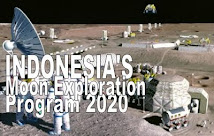
Larger government programs have advocated manned missions to the Moon and possibly Mars sometime after 2010.
Contents
- 1 History
- 2 Future of Space Exploration
- 3 Targets of exploration
- 4 Rationales
- 5 Opposition
- 6 Related topics
- 7 See also
- 8 References
- 9 External links
Sumber:
Wikipedia
MIT Open Course Ware