Astrophysics Laboratory
~Tangan~
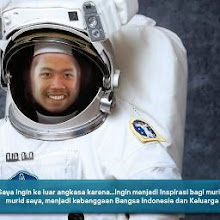
Apa gunanya tangan kalau tidak dipergunakan, apa juga manfaat tangan kalau dipergunakan untuk kemaksiatan,
~Mata~
Mata itu umpama satelit, sekali-kali jangan salah dipergunakan
Oleh:
Mujahid Cinta
Harvard-Smithsonian Center for Astrophysics
60 Garden Street, Cambridge, MA 02138
60 Garden Street, Cambridge, MA 02138
Staff
Professor John M. Kovac, Dr. Thomas Dame, and members of the Department.
Harvard College/GSAS: 3615
Spring 2011; limited to 16
First meeting: Wednesday, Jan 26, 2 PM *
Location: Observatory Pratt Conference Room
| Charles R. Alcock | |
|---|---|
 | |
Born | Charles Roger Alcock 1951  Windsor, England |
| Education | California Institute of Technology |
| Occupation | Astrophysicist |
| Years active | 1977 – present |
| Known for |
|
| Awards | |
| Website | |
| Center for Astrophysics | |
Prof. Dr. Charles Roger Alcock, Ph.D. (born 1951 in Windsor, Berkshire, England)
Laboratory and observational projects in astrophysics, carried out with the research facilities of the Harvard-Smithsonian Center for Astrophysics. Teams of two students perform two research projects during the course. Telescopes that may be used include the Submillimeter Array, the CfA millimeter-wave telescope, the Clay Telescope, and the heliostat at the Science Center. Laboratory projects include development of hard X-ray imaging detectors, testing of superconducting submillimeter detectors, and millimeter-wave laboratory spectroscopy.
Intended primarily for concentrators in Astronomy and Astrophysics or combined concentrators with Physics. Students with Physics as their primary concentration, but with a serious interest in astrophysics, may take this to satisfy their laboratory requirement (in lieu of Physics 191) upon petition to the Head Tutor in Physics.
Prerequisite: Astronomy 16 or 17, or Physics 15c or equivalent.
*NOTE: Only the first meeting is on Wednesday at 2 PM. Most subsequent meetings are arranged by the 2-student teams and their instructors, so course conflicts are rarely an issue. See the General Information page for the times and dates of the other group meetings.
Prerequisites
Astronomy 16 or 17, or Physics 15c or equivalent. The course is intended primarily for concentrators in Astronomy and Astrophysics or combined concentrators with Physics.
Requirements
Students work on an experiment in pairs but must submit individual written reports on each of two experiments performed during the term. Students must also give presentations on their experiments on March 9 and April 27.
The report (20 pages or less) should be modeled after a scientific journal article. It should contain an introduction which reviews the basic scientific principles behind the experiment and its astrophysical relevance, a section describing your preparation for and execution of the experiment, a section on your analysis and interpretation of the data, including a discussion of instrumental and possible systematic errors, and a conclusion discussing what was learned and how the experiment might be improved or followed up on. Figure captions and a reference list should also be included.
Presentations (15 minutes for a team of two students) should basically follow the same organization as the paper, with one student perhaps giving an introduction and description of the experiment, and the other describing the data analysis and results. A progress report on your analysis will be acceptable if the experiment was performed just a few days before. Proper timing of the presentation is very important since they will be strictly limited to 15 minutes.
Hours will vary with the experiment; some will require one or two late-night or overnight observing sessions.
Required Textbook
Data Reduction and Error Analysis for the Physical Sciences
Third Edition, 2003
Philip R. Bevington & D. Keith Robinson
Boston : McGraw-Hill.
QA278.B48
Available from the Harvard Coop
General Meetings
All general meetings are held in the Pratt Conference Room at the Center for Astrophysics.
Grades
Course grade will be based on lab work (30%), oral presentations (20%), and the written reports (50%).
Useful Link
Prerequisites
Astronomy 16 or 17, or Physics 15c or equivalent. The course is intended primarily for concentrators in Astronomy and Astrophysics or combined concentrators with Physics.
Requirements
Students work on an experiment in pairs but must submit individual written reports on each of two experiments performed during the term. Students must also give presentations on their experiments on March 9 and April 27.
The report (20 pages or less) should be modeled after a scientific journal article. It should contain an introduction which reviews the basic scientific principles behind the experiment and its astrophysical relevance, a section describing your preparation for and execution of the experiment, a section on your analysis and interpretation of the data, including a discussion of instrumental and possible systematic errors, and a conclusion discussing what was learned and how the experiment might be improved or followed up on. Figure captions and a reference list should also be included.
Presentations (15 minutes for a team of two students) should basically follow the same organization as the paper, with one student perhaps giving an introduction and description of the experiment, and the other describing the data analysis and results. A progress report on your analysis will be acceptable if the experiment was performed just a few days before. Proper timing of the presentation is very important since they will be strictly limited to 15 minutes.
Hours will vary with the experiment; some will require one or two late-night or overnight observing sessions.
The first experiment should be completed by the day of the first presentations, March 9, and the first report is due on March 28. The second experiment should be completed by April 27, the last day of classes, and its report is due on May 5.
Data Reduction and Error Analysis for the Physical Sciences
Third Edition, 2003
Philip R. Bevington & D. Keith Robinson
Boston : McGraw-Hill.
QA278.B48
Available from the Harvard Coop
General Meetings
All general meetings are held in the Pratt Conference Room at the Center for Astrophysics.
- Wednesday, Jan. 26, 2-4 PM: Organizational meeting
- Wednesday, Mar. 9, 1-4 PM: Student presentations
- Wednesday, April 27, 1-4 PM: Student presentations
Grades
Course grade will be based on lab work (30%), oral presentations (20%), and the written reports (50%).
Useful Link
- ADS Bibliographic databases, an essential tool of modern astronomers
- astro-ph Astronomy e-prints
- Astronomy Picture of the Day - never disappoints
- Chandra Coordinate Conversion and Precession Tool
- Clear Sky Clock - best local cloud forecaster
- SkyView - virtual telescope
- AstroWeb - Guide to astronomy on the internet
- AAS American Astronomical Society
- Handbook of Space Astronomy and Astrophysics by Martin V. Zombeck
- Research links from Harvard Department of Astronomy