Sunday, 7 June 2009

Indonesian Space Sciences & Technology School

Indonesian Space Sciences & Technology School


SPACE MISSIONS


This page provides a comprehensive list of all manned space flights.  Included are spacecraft name, crew, launch and return dates, duration and a brief mission description.  We start with Yuri Gagarin's historical flight in April 1961 and conclude with the most recent manned missions.  Although not always up to the minute, I try to update this list at least a couple times a year.


This page provides a list of most probes and landers sent to study our major and minor planetary neighbors.  Included are spacecraft name, launch date, booster, vehicle weight, and mission description.  We start with the first probes launched in the early 1960s and conclude with our current successes and failures.  Although there may be a slight lag, I try to update this list whenever there is a major new development.


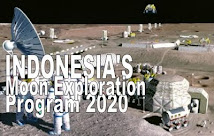
This page provides a list of most unmanned probes and landers sent to study the Moon.  Included are spacecraft name, launch date, booster, vehicle weight, and mission description.  The Moon was a logical first target for the world's fledgling space programs and, after a long hiatus, it is once again becoming a target for investigation.  I try to update this list whenever there is a major new development.



Added & Edited

By: Arip Nurahman
Department of Physics Education, Faculty of Sciences and Mathematics
Indonesia University of Education

and

Follower Open Course Ware at Massachusetts Institute of Technology
Cambridge, USA
Department of Physics 
http://web.mit.edu/physics/
http://ocw.mit.edu/OcwWeb/Physics/index.htm
&
Aeronautics and Astronautics Engineering
http://web.mit.edu/aeroastro/www/
http://ocw.mit.edu/OcwWeb/Aeronautics-and-Astronautics/index.htm


Sources:
Breauning

Friday, 5 June 2009

Ekonomi dan Astro Fisika

Astrophysics in Quantum Relativistic Chaotic Condition for solving Economics Frustrated System

 by: Arip Nurahman


Econophysics is an interdisciplinary research field, applying theories and methods originally developed by physicists in order to solve problems in economics, usually those including uncertainty or stochastic processes and nonlinear dynamics. Its application to the study of financial markets has also been termed statistical finance referring to its roots in statistical physics.

Physicists’ interest in the social sciences is not new; Daniel Bernoulli, as an example, was the originator of utility-based preferences. One of the founders of neoclassical economic theory, former Yale University Professor of Economics Irving Fisher, was originally trained under the renowned Yale physicist, Josiah Willard Gibbs. Likewise, Jan Tinbergen, who won the first Nobel Prize in economics in 1969 for having developed and applied dynamic models for the analysis of economic processes, studied physics with Paul Ehrenfest at Leiden University.

Econophysics was started in the mid-1990s by several physicists working in the subfield of statistical mechanics. Unsatisfied with the traditional explanations and approaches of economists - which usually prioritized simplified approaches for the sake of soluble theoretical models over agreement with empirical data - they applied tools and methods from physics, first to try to match financial data sets, and then to explain more general economic phenomena.

One driving force behind econophysics arising at this time was the sudden availability of large amounts of financial data, starting in the 1980s. It became apparent that traditional methods of analysis were insufficient - standard economic methods dealt with homogeneous agents and equilibrium, while many of the more interesting phenomena in financial markets fundamentally depended on heterogeneous agents and far-from-equilibrium situations.

Monday, 1 June 2009

High Energy Astrophysical Phenomena


High-energy astrophysics involves the study of exceedingly dynamic and energetic phenomena occurring near the most extreme celestial objects known to exist, such as black holes, neutron stars, white dwarfs, and supernova remnants. High-Energy Astrophysics provides graduate and advanced undergraduate students with the most complete, self-contained introduction to the subject available. This textbook covers all the essentials, weaving together the latest theory with the experimental techniques, instrumentation, and observational methods astronomers use to study high-energy radiation from space.
Fulvio Melia introduces topics at the forefront of today's research, including relativistic particles, energetic radiation, and accretion disk theory. No other textbook offers such a thorough yet concise treatment of the key aspects of high-energy astrophysics--both theoretical and observational--or delves as deeply into modern detection techniques, satellite systems, and analytical and numerical modeling used by theoreticians. Amply illustrated, High-Energy Astrophysics is also ideal for researchers interested in the application of fundamental physical laws to understand how matter and radiation behave in regions of the universe where physical conditions are most extreme.
  • Uniquely weaves together the theoretical and experimental aspects of this important branch of astronomy
  • Features stunning images of the high-energy sky
  • Fully describes the principal classes of high-energy sources, with an in-depth study of many archetypal objects within them
  • Provides an excellent, self-contained resource for the classroom, written by a preeminent researcher and teacher in the field
Review:
"The well-written work provides an excellent balance between relevant graduate physics and observational summaries of key high-energy astrophysical phenomena, such as pulsars, black holes, and active galactic nuclei. The explanations are lucid and concise, and the mathematical detail is well suited to the intended audience, primarily graduate students in astrophysics."--Choice
Endorsement:
"A splendid resource for students and researchers wanting a physics-based overview of the extraordinary findings of X-ray, gamma-ray, and cosmic-ray astronomy. The key properties of accreting black holes, gamma-ray bursts, pulsars, magnetars, galaxy clusters, and the many other fantastic denizens of the high-energy universe are highlighted, along with the tools and methods used to investigate them."--Niel Brandt, Pennsylvania State University
"The introductory graduate literature available in high-energy astrophysics has not kept up with the field's explosion in breadth and impact. This ambitious and badly needed text ably surveys the field, covering an impressive range of topics while still providing good physical insight. The many illustrations, references for further study, and discussions of modern topics like theoretical computer simulations should make this book attractive to students and professors alike."--Paolo Coppi, Yale University
"This is a very carefully constructed book and one that has been needed in our field for many years. Melia writes clearly, and the topics include most of the major ones that should be covered. Indeed, this is a book I would likely use in my high-energy astrophysics course here at Harvard."--Jonathan E. Grindlay, Harvard University
Other Princeton books authored or coauthored by Fulvio Melia:
Series:
Subject Areas: