“The discovery of nuclear reactions need not bring about the destruction of mankind
any more than the discovery of matches”
any more than the discovery of matches”
~ Albert Einstein~

Forum for Nuclear Cooperation in Asia (FNCA)
13th Ministerial Level Meeting
13th Ministerial Level Meeting
Teknologi maju mendorong manusia untuk memecahkan berbagai persoalan yang dihadapi secara lebih cepat, efektif, dan efisien. Dengan demikian, teknologi menjadi pemercepat pencapaian kesejahteraan sebuah bangsa. Perkenalan manusia dengan pengetahuan nuklir diawali dengan pengungkapan fenomena radioativitas ketika fisikawan Prancis, Antonie Henry Becquerel, menemukan unsur uranium pada 1896. Dari pengamatannya diketahui bahwa unsur uranium memancarkan radiasi yang dapat menghitamkan pelat film fotografi.
Gejala pemancaran radiasi dari suatu unsur yang tidak stabil selanjutnya dikenal sebagai radioaktivitas sedangkan unsur yang memancarkan radiasi disebut zat radioaktif atau radionuklida. Dalam perkembangan lebih lanjut, diketahui oleh Otto Hahn dan Fritz Strassmann pada 1938, unsur U-235 dapat mengalami reaksi fisi atau pembelahan inti atom berantai apabila ditembaki dengan netron termal.
Peristiwa inilah yang mendasari penemuan bom nuklir dan Pembangkit Listrik Tenaga Nuklir (PLTN).
Bom nuklir terjadi apabila reaksi fisi yang terjadi secara sengaja tidak dikendalikan. Adapun di dalam sistem PLTN, reaksi fisi yang terjadi dikendalikan sedemikian rupa sehingga energi yang dibangkitkan dapat dimanfaatkan untuk menghasilkan listrik.
Dewasa ini telah beroperasi 430 PLTN di seluruh dunia yang beroperasi di 32 negara. Nuklir memberikan kontribusi listrik dunia mencapai 16 persen, sebuah angka yang sangat signifikan. Keunggulan nuklir dibandingkan pembangkit listrik yang lain adalah bahan bakar yang hemat dengan harga yang cukup stabil, serta zero greenhouse gases emmission.
The Hon. Prof. Dr. Gusti Muhammad HATTA, the State Minister for Research and Technology, the Ministry of Research and Technology of Indonesia, delivered the opening welcoming remarks, in which he expressed welcome to all the participants, and emphasized the importance of regional cooperation through FNCA.
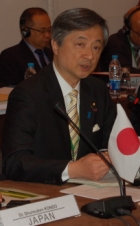
The Hon. Mr. Shinkun HAKU |
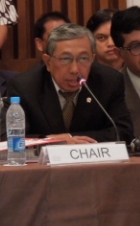
The Hon. Prof. Dr. Gusti Muhammad HATTA |
Masa Depan Pengembangan Reaktor Riset di Indonesia
Research reactors are nuclear reactors that serve primarily as a neutron source. They are also called non-power reactors, in contrast to power reactors that are used for electricity production, heat generation, or maritime propulsion.
Purpose
The neutrons produced by a research reactor are used for neutron scattering, non-destructive testing, analysis and testing of materials, production of radioisotopes, research and public outreach and education. Research reactors that produce radioisotopes for medical or industrial use are sometimes called isotope reactors. Reactors that are optimised for beamline experiments nowadays compete with spallation sources.
Technical Aspects
Research reactors are simpler than power reactors and operate at lower temperatures. They need far less fuel, and far less fission products build up as the fuel is used. On the other hand, their fuel requires more highly enriched uranium, typically up to 20% U-235, although some use 93% U-235; while 20% enrichment is not generally considered usable in nuclear weapons, 93% is commonly referred to as "weapons grade".
They also have a very high power density in the core, which requires special design features. Like power reactors, the core needs cooling, typically natural or forced convection with water, and a moderator is required to slow down the neutrons and enhance fission. As neutron production is their main function, most research reactors benefit from reflectors to reduce neutron loss from the core.
Componets
The key components common to most types of nuclear power plants are:
- Nuclear fuel
- Nuclear reactor core
- Neutron moderator
- Neutron poison
- Neutron howitzer (provides steady source of neutrons to re-initiate reaction following shutdown)
- Coolant (often the Neutron Moderator and the Coolant are the same, usually both purified water)
- Control rods
- Reactor vessel
- Boiler feedwater pump
- Steam generators (not in BWRs)
- Steam turbine
- Electrical generator
- Condenser
- Cooling tower (not always required)
- Radwaste System (a section of the plant handling radioactive waste)
- Refueling Floor
- Spent fuel pool
- Nuclear safety systems
- Reactor Protective System (RPS)
- Emergency Diesel Generators
- Emergency Core Cooling Systems (ECCS)
- Standby Liquid Control System (emergency boron injection, in BWRs only)
- Essential service water system (ESWS)
- Containment building
- Control room
- Emergency Operations Facility
- Nuclear training facility (usually contains a Control Room simulator)
Bagaimana Pengembangan Reaktor Riset di Indonesia?
Inilah topik bahasan dalam acara “Diskusi Perekayasaan Reaktor Inovatif” yang diselenggarakan oleh Forum Group Diskusi Reaktor Riset dan Reaktor Daya - BATAN pada 21 dan 22 Desember 2012 di PTNBR BATAN Bandung.
Kegiatan yang di selenggarakan oleh Pusat Rekayasa Perangkat Nuklir (PRPN) bekerja sama dengan Pusat Teknologi Nuklir Bahan dan Radiometri (PTNBR) BATAN diikuti oleh lebih dari 30 orang praktisi Reaktor dari 10 satuan kerja yang ada di BATAN.
Kepala BATAN Prof. Dr. Djarot Sulistio Wisnubroto, berharap para peneliti di bidang reaktor dapat terus mengembangkan penelitian dan inovasi baru yang berkaitan dengan pemanfaatan reaktor riset dan reaktor daya demi untuk kemajuan Indonesia.

Kegiatan diskusi pada hari pertama diisi dengan presentasi dari peneliti-peneliti bidang reaktor yang terkait dengan pemanfaatan dan pengembangan reaktor riset dalam berbagai hal. Diawali dengan “Pembelajaran dari Strategi Pengembangan Reaktor Riset di negara Jepang, Korea dan Cina serta tren perkembangan Teknologi Reaktor Dunia” yang disampaikan oleh PRPN BATAN.
Kemudian pembahasan mengenai status dari 3 buah reaktor riset yang ada di Indonesia (Reaktor TRIGA 2000 Bandung, Reaktor Kartini Yogyakarta dan Reaktor G.A. Siwabessy, Serpong).
Dibahas pula mengenai pemanfaatan reaktor riset untuk produksi radioisotop dan radiofarmaka, serta karakterisasi dan uji material nuklir. Yang tak kalah penting adalah pembahasan tentang perkembangan teknologi Reaktor riset, design reaktor riset, trend teknologi reaktor riset, teknologi bahan bakar reaktor riset serta prakiraan teknologi reaktor riset di masa mendatang.
Dibahas pula mengenai pemanfaatan reaktor riset untuk produksi radioisotop dan radiofarmaka, serta karakterisasi dan uji material nuklir. Yang tak kalah penting adalah pembahasan tentang perkembangan teknologi Reaktor riset, design reaktor riset, trend teknologi reaktor riset, teknologi bahan bakar reaktor riset serta prakiraan teknologi reaktor riset di masa mendatang.
Pada hari kedua, kegiatan diskusi diawali dengan presentasi tentang “Perkembangan Dunia dalam Litbang Reaktor Daya” oleh PTRKN dan PRPN. Dilanjutkan dengan “status Perkembangan IFAR” (PTRKN), “Status Perkembangan Sistem Energi Nuklir Indonesia” (PPEN), “Status Perkembangan NESA Indonesia” (PTBN), “Status Litbang BBN RTT dan program mendatang” (PTAPB), serta “Status Litbang Pemrosesan Mineral Bahan Nuklir” (PPGN).
Akhirnya kegiatan diskusi selama 2 hari ini ditutup oleh Deputi PDT, Dr. Anhar Riza Antariksawan.
Sejarah Singkat Program Pembangunan PLTN di Indonesia
Sampai saat ini Indonesia belum berhasil membangun Pembangkit Listrik Tenaga Nuklir (PLTN), sehingga belum ada sebuahpun PLTN yang dapat dioperasikan untuk mengurangi beban kebutuhan energi listrik yang saat ini semakin meningkat di Indonesia. Padahal energi nuklir saat ini di dunia sudah cukup berkembang dengan menguasai pangsa sekitar 16% listrik dunia.
Hal ini menunjukkan bahwa energi nuklir adalah sumber energi potensial, berteknologi tinggi, berkeselamatan handal, ekonomis, dan berwawasan lingkungan, serta merupakan sumber energi alternatif yang layak untuk dipertimbangkan dalam Perencanaan Energi Jangka Panjang bagi Indonesia guna mendukung pembangunan yang berkelanjutan.
Reactor Types: Classifications
Nuclear Reactors are classified by several methods; a brief outline of these classification methods is provided.

Aplikasi Nuklir
BATAN sebagai lembaga pemerintah nonkementerian dalam kegiatan litbangyasa ketenaganukliran hingga saat ini sudah mengoperasikan tiga buah reaktor penelitian nuklir, masing-masing Reaktor Serba Guna GA Siwabessy di Serpong, Reaktor Triga 2000 di Bandung, dan Reaktor Kartini di Yogyakarta. Fokus litbangyasa Batan meliputi bidang energi (teknologi PLTN), aplikasi nuklir di bidang kesehatan, bidang pertanian, dan industri.
Dalam bidang pertanian, radiasi digunakan untuk pemuliaan benih tanaman (padi, kedelai, jarak pagar, kapas, dan pengawetan bahan makanan), serta pengendalian hama melalui teknik pemandulan. Di bidang kesehatan, tenaga nuklir telah banyak diaplikasikan untuk tujuan radiodiagnostik, radioterapi, dan kedokteran nuklir. Adapun aplikasi nuklir untuk industri di antaranya penggunaan radiografi industri (uji tak merusak material), well logging (penelusuran minyak bumi), iradiator industri, dan teknik perunutan.
Pada kesempatan 5 Desember 2012, BATAN telah menapaki 54 tahun perjalanan pengabdiannya. Banyak harapan dari berbagai kalangan untuk lebih mendayagunakan penguasaan dan penerapan teknologi nuklir guna turut mendorong percepatan pembangunan dan kesejahteraan rakyat.
Penguasaan nuklir bagi Indonesia bisa menjadi peluang untuk memajukan Indonesia sejajar dengan negara maju di dunia.
Akhirnya kegiatan diskusi selama 2 hari ini ditutup oleh Deputi PDT, Dr. Anhar Riza Antariksawan.
Sejarah Singkat Program Pembangunan PLTN di Indonesia
Sampai saat ini Indonesia belum berhasil membangun Pembangkit Listrik Tenaga Nuklir (PLTN), sehingga belum ada sebuahpun PLTN yang dapat dioperasikan untuk mengurangi beban kebutuhan energi listrik yang saat ini semakin meningkat di Indonesia. Padahal energi nuklir saat ini di dunia sudah cukup berkembang dengan menguasai pangsa sekitar 16% listrik dunia.
Hal ini menunjukkan bahwa energi nuklir adalah sumber energi potensial, berteknologi tinggi, berkeselamatan handal, ekonomis, dan berwawasan lingkungan, serta merupakan sumber energi alternatif yang layak untuk dipertimbangkan dalam Perencanaan Energi Jangka Panjang bagi Indonesia guna mendukung pembangunan yang berkelanjutan.
Reactor Types: Classifications
Nuclear Reactors are classified by several methods; a brief outline of these classification methods is provided.
Classification by type of nuclear reaction
- Nuclear fission. All commercial power reactors are based on nuclear fission. They generally use uranium and its product plutonium as nuclear fuel, though a thorium fuel cycle
is also possible. Fission reactors can be divided roughly into two
classes, depending on the energy of the neutrons that sustain the
fission chain reaction:
- Thermal reactors use slowed or thermal neutrons. Almost all current reactors are of this type. These contain neutron moderator materials that slow neutrons until their neutron temperature is thermalized, that is, until their kinetic energy approaches the average kinetic energy of the surrounding particles. Thermal neutrons have a far higher cross section (probability) of fissioning the fissile nuclei uranium-235, plutonium-239, and plutonium-241, and a relatively lower probability of neutron capture by uranium-238 (U-238) compared to the faster neutrons that originally result from fission, allowing use of low-enriched uranium or even natural uranium fuel. The moderator is often also the coolant, usually water under high pressure to increase the boiling point. These are surrounded by a reactor vessel, instrumentation to monitor and control the reactor, radiation shielding, and a containment building.
- Fast neutron reactors use fast neutrons to cause fission in their fuel. They do not have a neutron moderator, and use less-moderating coolants. Maintaining a chain reaction requires the fuel to be more highly enriched in fissile material (about 20% or more) due to the relatively lower probability of fission versus capture by U-238. Fast reactors have the potential to produce less transuranic waste because all actinides are fissionable with fast neutrons, but they are more difficult to build and more expensive to operate. Overall, fast reactors are less common than thermal reactors in most applications. Some early power stations were fast reactors, as are some Russian naval propulsion units. Construction of prototypes is continuing (see fast breeder or generation IV reactors).
- Nuclear fusion. Fusion power is an experimental technology, generally with hydrogen as fuel. While not suitable for power production, Farnsworth-Hirsch fusors are used to produce neutron radiation.
Classification by moderator material
Used by thermal reactors:
- Graphite moderated reactors
- Water moderated reactors
- Heavy water reactors
- Light water moderated reactors (LWRs). Light water reactors use ordinary water to moderate and cool the reactors. When at operating temperature, if the temperature of the water increases, its density drops, and fewer neutrons passing through it are slowed enough to trigger further reactions. That negative feedback stabilizes the reaction rate. Graphite and heavy water reactors tend to be more thoroughly thermalised than light water reactors. Due to the extra thermalization, these types can use natural uranium/unenriched fuel.
- Light element moderated reactors. These reactors are moderated by lithium or beryllium.
- Molten salt reactors (MSRs) are moderated by a light elements such as lithium or beryllium, which are constituents of the coolant/fuel matrix salts LiF and BeF2.
- Liquid metal cooled reactors, such as one whose coolant is a mixture of Lead and Bismuth, may use BeO as a moderator.
- Organically moderated reactors (OMR) use biphenyl and terphenyl as moderator and coolant.
Classification by generation
- Generation I reactor
- Generation II reactor (most current nuclear power plants)
- Generation III reactor (evolutionary improvements of existing designs)
- Generation IV reactor (technologies still under development)

Desain Maket Pembangkit Listrik Tenaga Nuklir
Aplikasi Nuklir
BATAN sebagai lembaga pemerintah nonkementerian dalam kegiatan litbangyasa ketenaganukliran hingga saat ini sudah mengoperasikan tiga buah reaktor penelitian nuklir, masing-masing Reaktor Serba Guna GA Siwabessy di Serpong, Reaktor Triga 2000 di Bandung, dan Reaktor Kartini di Yogyakarta. Fokus litbangyasa Batan meliputi bidang energi (teknologi PLTN), aplikasi nuklir di bidang kesehatan, bidang pertanian, dan industri.
Dalam bidang pertanian, radiasi digunakan untuk pemuliaan benih tanaman (padi, kedelai, jarak pagar, kapas, dan pengawetan bahan makanan), serta pengendalian hama melalui teknik pemandulan. Di bidang kesehatan, tenaga nuklir telah banyak diaplikasikan untuk tujuan radiodiagnostik, radioterapi, dan kedokteran nuklir. Adapun aplikasi nuklir untuk industri di antaranya penggunaan radiografi industri (uji tak merusak material), well logging (penelusuran minyak bumi), iradiator industri, dan teknik perunutan.
Pada kesempatan 5 Desember 2012, BATAN telah menapaki 54 tahun perjalanan pengabdiannya. Banyak harapan dari berbagai kalangan untuk lebih mendayagunakan penguasaan dan penerapan teknologi nuklir guna turut mendorong percepatan pembangunan dan kesejahteraan rakyat.
Penguasaan nuklir bagi Indonesia bisa menjadi peluang untuk memajukan Indonesia sejajar dengan negara maju di dunia.
Sumber:
1. Kementrian Riset dan Teknologi
2. BATAN
3. IAEA
4. Portal Energi Wikipedia
5. Forum for Nuclear Cooperation in Asia
Ucapan Terima Kasih
Kepada seluruh Dosen dan Guru Penulis, Kemenristek, BATAN dan Seluruh Ilmuwan Tanah Air.
Juga Kepada Keluarga dan Sahabat, Maju Terus Ilmu Pengetahuan dan teknologi Indonesia.
Kunjungi Sekolah Kami:
Nuclear Science & Technology School Nuklir Power sebagai pemercepat Kesejahteraan Umat Manusia.
http://nuclearscienceandtechnology.blogspot.com